
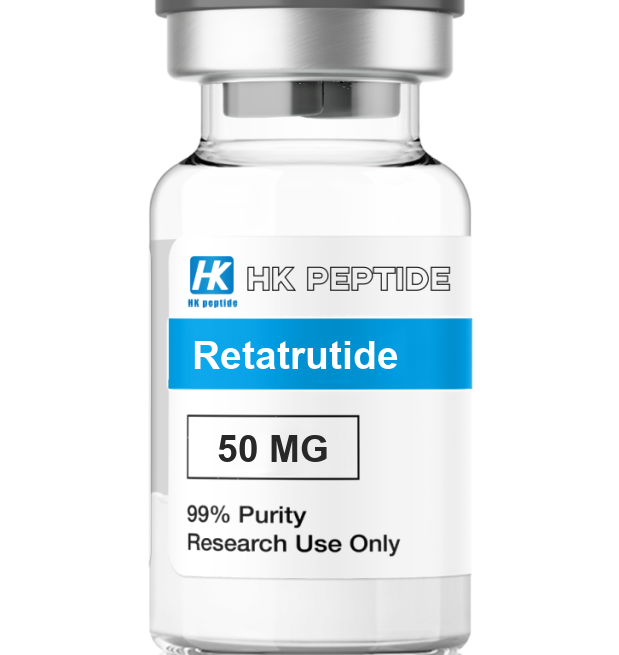
When a supplier lists a peptide at ≥99% purity, what does that figure actually describe — and why does it matter for research? This guide explains how purity is measured and why it is the single most important quality metric for a reference standard.
What “purity” measures
Peptide purity expresses the proportion of the target sequence relative to related impurities such as truncated or deletion sequences, incomplete deprotection products, and residual by-products of synthesis. A 99% result means the overwhelming majority of the material is the intended sequence.
How HPLC quantifies it
High-Performance Liquid Chromatography (HPLC) separates the components of a sample as they pass through a column, producing a chromatogram. The area of the main peak relative to the total peak area gives the purity percentage. A clean, dominant single peak is the visual signature of a high-purity peptide.
Identity vs purity
Purity answers “how much is the target?”; identity answers “is it the right molecule?” The two are confirmed together — HPLC for purity and mass spectrometry for molecular-weight confirmation. A complete certificate of analysis reports both.
Why it changes research outcomes
- Impurities can introduce confounding variables into study data.
- Inconsistent purity undermines lot-to-lot reproducibility.
- Documented purity supports transparent, defensible research records.
HK Peptide publishes third-party Janoshik certificates of analysis so purity is verifiable rather than assumed.
Frequently asked questions
Is higher peptide purity always better?
For research reference standards, higher purity generally means fewer confounding impurities and more reproducible results, which is why ≥99% is a common benchmark.
What is the difference between HPLC and mass spectrometry?
HPLC measures how pure a sample is (percentage of target sequence), while mass spectrometry confirms the molecular identity by measuring molecular weight.
What is a certificate of analysis?
A COA is a document from a testing lab reporting a batch’s purity and identity results. HK Peptide provides third-party Janoshik COAs.
Every HK Peptide reference standard is HPLC-verified with third-party Janoshik lab reports available on request. Browse the full catalogue or view our certificates of analysis.
Research use only. This article is educational and written for laboratory and research audiences. HK Peptide reference materials are supplied strictly for in-vitro and other non-human research. Nothing here is medical advice, and none of these compounds are intended for human consumption or to diagnose, treat, cure, or prevent any condition.


We use cookies to improve your experience. By continuing, you agree to our cookie policy.
I AcceptYour Cart



All Categories
Search
HK Peptide
High-purity research peptides