
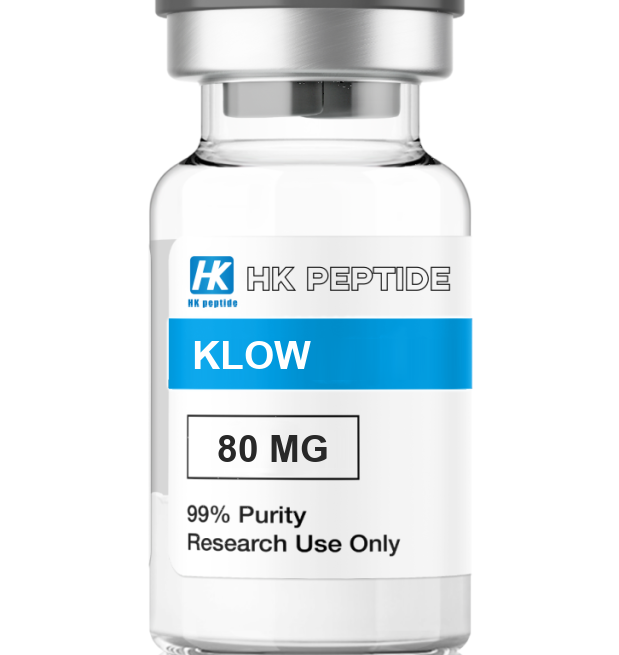
Correct handling protects the integrity of a peptide reference standard from the moment it arrives until it is used in a study. This practical guide covers storage of lyophilised material and the fundamentals of reconstitution in a research setting.
Storing lyophilised peptides
Freeze-dried (lyophilised) peptides are the most stable form for shipping and storage. General laboratory practice is to keep them:
- Cold — typically refrigerated for short periods and frozen for longer-term storage
- Protected from light
- Sealed against moisture and repeated temperature cycling
Because water accelerates degradation, vials are kept sealed until they are needed.
Reconstitution basics
Reconstitution is the process of dissolving the lyophilised powder into a liquid for use in research. Bacteriostatic water is commonly used because its preservative helps limit microbial growth over a study period. The diluent is introduced gently against the side of the vial — not injected forcefully onto the powder — to avoid mechanical stress on the peptide.
Working out concentration
Concentration is simply the mass of peptide divided by the volume of diluent added. Documenting the exact ratio for each vial keeps a study reproducible and makes results comparable across batches. Reconstitution consumables are listed under our research supplies.
Stability after reconstitution
Once in solution, peptides are generally less stable than in powder form and are kept cold and used within a defined window. Labelling each vial with its date, concentration and lot number is standard good-laboratory practice.
Frequently asked questions
Why is bacteriostatic water used to reconstitute peptides?
Its preservative helps limit microbial growth, which is useful when a reconstituted research solution is stored over a period of time.
How should lyophilised peptides be stored?
Cold, dark and dry — refrigerated for short periods, frozen for longer-term storage, and sealed against moisture until reconstitution.
How long is a reconstituted peptide stable?
Peptides are less stable in solution than as a dry powder. Researchers keep reconstituted material cold and use it within a defined window based on the specific sequence.
Every HK Peptide reference standard is HPLC-verified with third-party Janoshik lab reports available on request. Browse the full catalogue or view our certificates of analysis.
Research use only. This article is educational and written for laboratory and research audiences. HK Peptide reference materials are supplied strictly for in-vitro and other non-human research. Nothing here is medical advice, and none of these compounds are intended for human consumption or to diagnose, treat, cure, or prevent any condition.


We use cookies to improve your experience. By continuing, you agree to our cookie policy.
I AcceptYour Cart



All Categories
Search
HK Peptide
High-purity research peptides